
On this page
- Who This Guide Is For (and Who It Is Not)
- Why Furnace Sizing Matters So Much in Timmins
- What a BTU Is and How Sizing Starts
- The Real Method: Heat Loss Calculations
- Input Rating Versus Output Rating
- Common Furnace Sizes and How Close You Need to Be
- The Problem With Oversized Furnaces
- The Problem With Undersized Furnaces
- Special Considerations for Timmins Homes
- A Simple Do-It-Yourself Estimate (With Its Limits)
- When to Size Up and When to Size Down
- Furnace Filter Sizing Basics
- The Role of a Professional Heat Loss Assessment
- Next Steps
For all your heating and cooling needs.
Call dispatch at (705) 221-0677 or request service.
If your furnace quit in the middle of a January cold snap, you already know how quickly a Timmins winter turns from uncomfortable to dangerous. When you go to replace that furnace, one question comes up before any other: what size do you actually need? Get it right and your home stays warm through the worst nights while your energy bills stay reasonable. Get it wrong and you deal with cold rooms, short equipment life, or a system that never quite catches up when it drops to -30C.
This guide walks you through how furnace sizing really works for a home in Northern Ontario. We keep the math simple, explain the terms in plain language, and show you why a proper heat loss calculation matters more here than almost anywhere else in the province.
Who This Guide Is For (and Who It Is Not)
This article is written for homeowners in Timmins and nearby communities like South Porcupine, Schumacher, Cochrane, Kapuskasing, Kirkland Lake, Hearst, and Smooth Rock Falls who are:
- Planning to replace an aging or failed furnace
- Trying to understand a quote a contractor gave them
- Comparing a new furnace against a cold-climate heat pump
- Curious why their current furnace short cycles or leaves rooms cold
This guide is not for you if you are looking for installation steps, brand comparisons, pricing details, or maintenance schedules. Those belong in other articles. Here we focus on one thing: how to figure out the right heating capacity for your home.
Why Furnace Sizing Matters So Much in Timmins
A furnace is a lot like a pair of boots. Too big and they flop around. Too small and they pinch. Both cause problems, and neither keeps you comfortable.
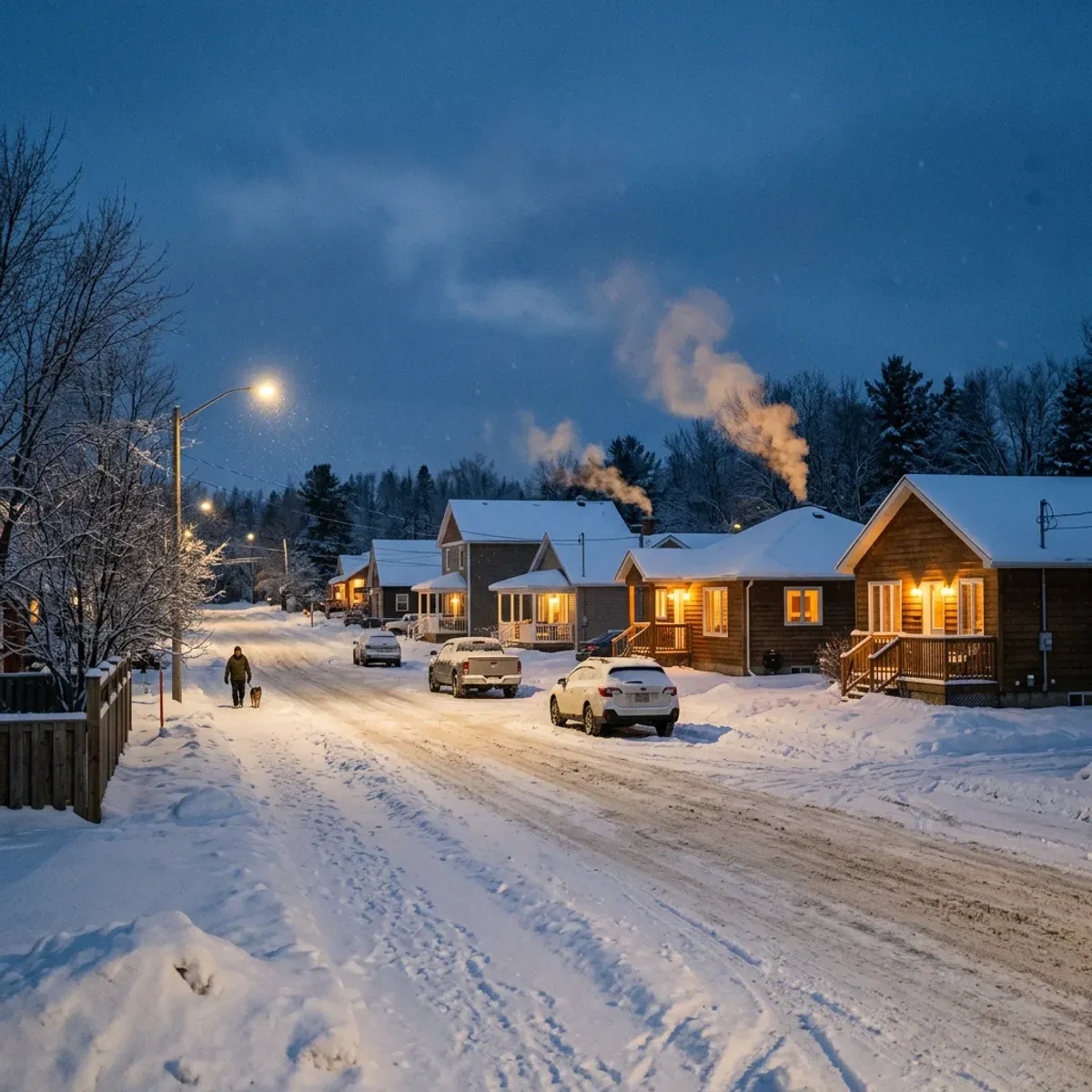
Timmins sits in one of the coldest climates in Ontario. Our winters bring long stretches of deep cold, and the Ontario Building Code design temperature for Timmins, the outdoor temperature heating equipment has to be sized for, is -34C. That figure comes from the code’s climatic data standard, SB-1. Wind chill does not come into it: a house loses heat based on the actual air temperature, not how cold it feels on your face. Under the code’s energy efficiency standard, SB-12, Timmins also falls in the colder of Ontario’s two climate zones, with higher heating demand than Southern Ontario. That means our homes need more heating capacity per square foot, and it means sizing mistakes cost more here than they do down south.
When outdoor temperatures are that low, the gap between inside and outside is huge. A small error in the calculation can push you a full size category off from what your home really needs. In a mild climate you might get away with that. In Timmins you feel it every cold night.
What a BTU Is and How Sizing Starts
A BTU, short for British Thermal Unit, is just a measure of heat. A furnace is rated by how many BTUs per hour it can produce. The bigger the number, the more heat it can put out.
The oldest and simplest sizing method is to multiply your home’s square footage by a heating factor. In warmer parts of Canada that factor might be low, but in a cold climate like ours it runs much higher. As a rough starting point only, a home in the coldest Canadian zones can need somewhere in the range of 50 to 70 BTU per square foot, and colder still in the far north.
Here is what that looks like for typical Timmins homes, using a conservative cold-climate factor as an estimate:
- A 1,200 square foot bungalow might land around 60,000 to 72,000 BTU
- An 1,800 square foot two-storey might land around 90,000 to 108,000 BTU
- A 2,400 square foot family home might land around 120,000 BTU or more
Notice we said estimate three times already. That is on purpose. Square footage math is a sanity check, not an answer. It ignores your insulation, your windows, your air sealing, and your basement. In a climate this harsh, those details change the number a lot.
The Real Method: Heat Loss Calculations
The proper way to size a furnace is a heat loss calculation. Instead of guessing from floor area, it measures how much heat your specific home loses on the coldest design day. In Canada, this is done using the CSA F280 standard, which is the method referenced by the Ontario Building Code for residential heating equipment.
You may have heard of the American version, called Manual J. It is the U.S. industry standard, currently in its 8th edition, and it works on the same principle. But the two use different climate data, and that difference matters. A Canadian calculation uses our design temperatures. An American one does not, and using U.S. numbers in a Timmins winter can leave you undersized. For a Canadian home, the CSA F280 approach is the one that counts. The industry reference for these calculations is HRAI’s residential heat loss and heat gain calculation manual.
A proper heat loss calculation looks at:
- Insulation levels in walls, attic, and floors
- Window type, size, and condition
- Air leakage, or how drafty the home is
- Ceiling height and heated volume
- Basement type and whether it is heated
- How many walls face outside and which way the home faces
The result is a real number, expressed in BTUs per hour, for how much heat your home needs on a design-cold day. That is the number your furnace should be built around.
Input Rating Versus Output Rating
Here is a detail that trips up a lot of homeowners. The BTU number printed on a furnace is usually the input rating, meaning how much energy it consumes. What actually heats your home is the output rating, which is lower because no furnace is perfectly efficient.
The efficiency measure for furnaces is called AFUE. A furnace’s output equals its input multiplied by its efficiency. Two quick examples using the same input:
- A 90,000 BTU input furnace at 80% efficiency produces 72,000 BTU of actual output
- A 90,000 BTU input furnace at 93% efficiency produces 83,700 BTU of actual output
Same input, very different heat delivered. That is why a high-efficiency furnace can heat your home with a smaller input rating than an older, less efficient one. When you size, you match your home’s calculated heat loss to the furnace’s output, not its input. You can read more about furnace efficiency in the Department of Energy furnace efficiency information, and for Canadian guidance on efficient heating, see the Natural Resources Canada heating efficiency guidelines.
Under Ontario’s SB-12 energy rules, high-efficiency equipment (AFUE 90% or higher) can change the insulation trade-offs allowed in new construction. That is a building-code detail, not a sales pitch, but it shows how efficiency and sizing connect.
Common Furnace Sizes and How Close You Need to Be
Residential furnaces come in set increments, not custom sizes. Common input ratings include 40,000, 60,000, 80,000, 100,000, and 120,000 BTU. Your calculated number will rarely land exactly on one of these, and that is fine.
The goal is to get close, not perfect. Canadian sizing practice gives clear guardrails:
- Do not undersize below your calculated heat requirement. In a Timmins winter you cannot afford a furnace that cannot keep up.
- Do not oversize by too much. Older CSA F280 commentary referenced a cap of no more than 40% above the calculated design heat loss, but that maximum-capacity limit has been removed from the current version of the standard. The practical advice still holds: avoid sizing well beyond what your home actually needs.
Within those limits, you pick the nearest standard size that meets your home’s need without going wildly over. A furnace that is slightly generous is fine. One that is double what you need is a problem, as we will explain next.
The Problem With Oversized Furnaces
For years, the thinking was “bigger is safer.” Canadian research shows the opposite. Studies have found that furnaces in new homes are often oversized by 20% to 40%, and that oversizing causes real trouble.
An oversized furnace short cycles. That means it fires up, blasts heat, satisfies the thermostat quickly, and shuts off, over and over. A properly sized furnace should run 35 to 40 minutes of every hour on the coldest day. An oversized one might run only 10 to 20 minutes, in short bursts.
Short cycling causes:
- Uneven heating, with hot spots near vents and cold rooms farther away
- Reduced efficiency, because the furnace never settles into its best operating range
- More wear on the burner and blower from constant starting and stopping
- Higher bills, from wasted gas and, if the blower is oversized, extra electricity
Bigger does not mean warmer. It usually means a home that swings hot and cold while costing more to run.
The Problem With Undersized Furnaces
The opposite mistake is just as real, and in our climate it can be worse. An undersized furnace runs and runs but never quite reaches the temperature you set on the coldest nights.

That leads to:
- Rooms that stay cold during deep cold snaps
- A furnace running almost non-stop, wearing out faster
- Higher costs from constant operation
- A home that simply cannot keep up when it hits -30C
Undersizing is especially risky in Timmins because our design-cold days are not rare exceptions. They happen every winter. A furnace that is “close enough” in a mild climate can leave you shivering here.
Special Considerations for Timmins Homes
A few local realities change how we size furnaces in the North.
Older housing stock
Many Timmins homes were built well before modern energy codes. Older walls, thinner attic insulation, and leaky construction all raise heat loss. A square-footage estimate that assumes modern insulation will undersize an older home. This is exactly where a proper heat loss calculation earns its keep.
Finished basements
Lots of local homes have finished, heated basements that add real square footage and real heating demand. If your basement is heated, it counts. Leaving it out of the calculation is a common way homes end up undersized.
Renovations and additions
If you have added a room, finished a basement, or plan to, your heating load changes. A furnace sized for your old floor plan may not fit your new one.
Envelope upgrades work the other way
If you have added attic insulation, sealed drafts, or upgraded windows, your home now loses less heat. That can justify a smaller furnace than the one you are replacing. Fixing the house often lets you right-size the equipment.
A Simple Do-It-Yourself Estimate (With Its Limits)
If you want a rough number before you call anyone, here is a basic approach. Treat it as a ballpark only.
- Measure your total heated square footage, including a heated basement.
- Recognize that Timmins sits in a cold Northern Ontario zone with high heating demand.
- Honestly judge your insulation and air sealing as poor, average, or good.
- Apply a cold-climate factor, higher for poor insulation and lower for good.
- Multiply square footage by that factor to estimate required BTUs.
- Remember this is the rough load, and the furnace output should meet it.
This gets you in the neighbourhood. It does not account for your windows, drafts, basement type, or how many walls face the wind. That is why we always follow it with a real calculation before recommending equipment.
When to Size Up and When to Size Down
Within the acceptable range, small judgment calls matter. Here is how we think about it in the field.
Lean slightly larger if:
- Your insulation is poor or unknown
- Your windows are old or single-pane
- Your home is noticeably drafty
- You plan to finish more space soon
Lean slightly smaller if:
- Your home is well insulated and tight
- You recently upgraded windows or added insulation
- You have improved air sealing
Either way, stay inside the guardrails: meet the calculated load, and do not size well beyond what your home actually needs. A furnace is a long-term purchase, so it is worth getting a professional opinion rather than guessing at the edges.
If you are weighing a furnace against a cold-climate heat pump, sizing matters there too, and the choice deserves its own look. See our comparison of a heat pump versus a furnace for Timmins homes, and if a heat pump interests you, our heat pump installation page explains how we size units for real -30C performance.
Furnace Filter Sizing Basics
While we are talking sizes, a quick note on filters, since homeowners often ask. Your furnace filter size is separate from your furnace capacity, but the right filter keeps airflow healthy.
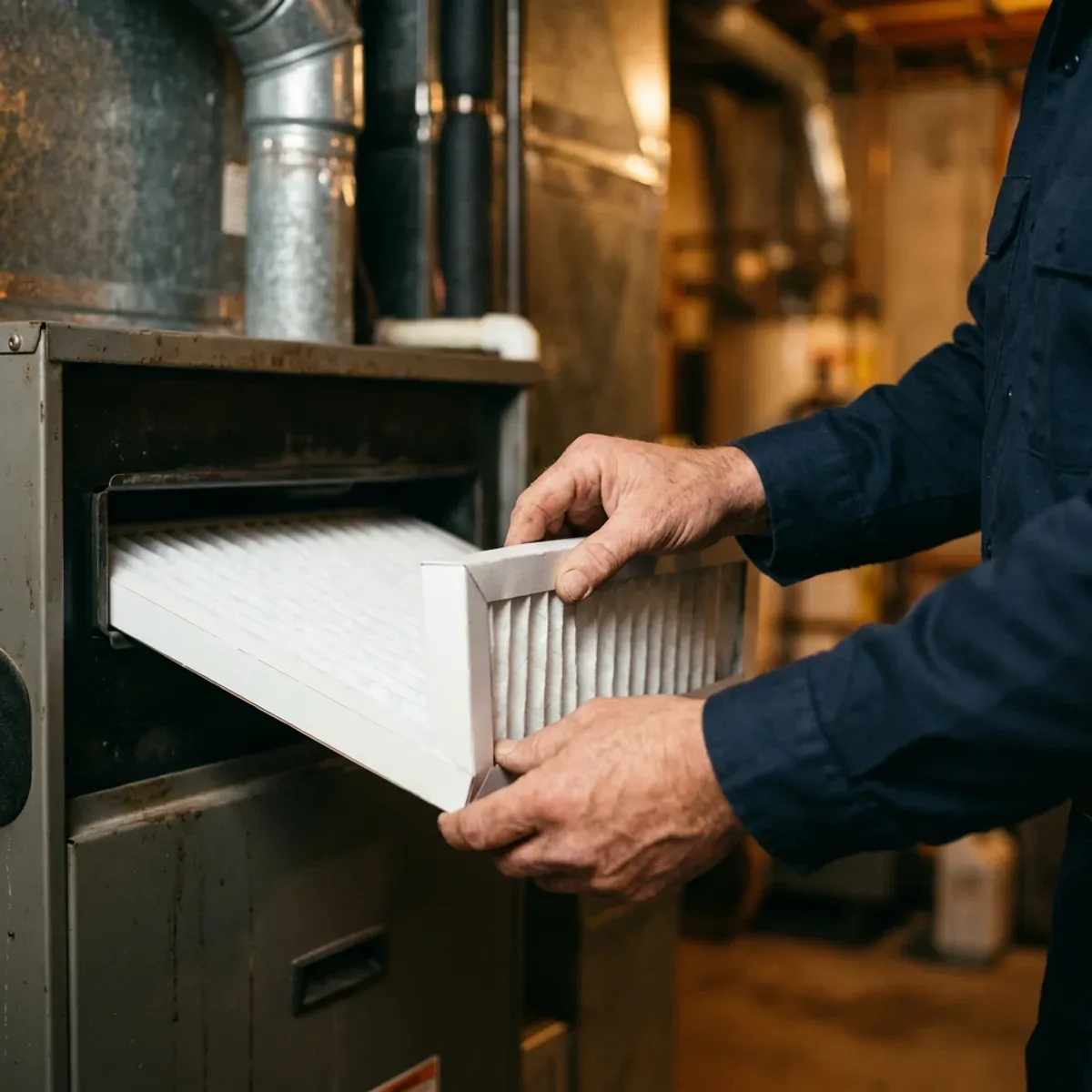
The most common residential filter sizes are:
- 16 x 20
- 16 x 25
- 20 x 20
- 20 x 25
Filters are measured as width by height by depth, in inches. The easiest way to find yours is to slide out the current filter and read the size printed on the cardboard frame, or measure the filter slot. Using the right size matters because a filter that is too small lets air slip around it, and poor airflow drags down comfort and efficiency.
The Role of a Professional Heat Loss Assessment
Online estimates are a fine starting point, but they are estimates. In a climate where -30C is normal, sizing errors have real consequences, so a proper assessment is worth it.
When we come out for a sizing assessment, we look at your actual home: its insulation, windows, air leakage, basement, and layout. For older homes where insulation is uncertain, we can also back-calculate your true heat loss from past gas bills, which often gives a more accurate picture than guessing at R-values. It helps to have a few things ready:
- The age of your home and any known insulation details
- Recent upgrades like windows, attic insulation, or air sealing
- Comfort complaints, such as cold rooms or a furnace that short cycles
- A recent winter energy bill, ideally from January or February
Proper sizing is the foundation of a furnace replacement that actually holds up. It protects your comfort, keeps running costs down, and helps your equipment last. On that last point, sizing is one of several factors, and you can read more in our guide on how long a furnace lasts for Timmins homeowners.
Next Steps
If you are staring down a furnace replacement, start with the right size. That single decision shapes your comfort and your bills for the next couple of decades. Run a rough estimate if you like, then let a licensed local crew confirm it with a proper heat loss calculation before you buy anything.
We are happy to come out, measure what matters, and give you a straight answer about what your home actually needs. You can learn more about the process on our furnace installation page.
For all your heating and cooling needs, call us at (705) 221-0677.
Mike Ironclad
