
On this page
- Who This Guide Is For
- Why Regular Furnace Maintenance Matters
- Homeowner-Friendly DIY Maintenance Tasks
- Filter Maintenance Deep Dive
- Clearing Exterior Vents in Northern Ontario
- Professional Maintenance Tasks and Why They Matter
- Safety Risks of DIY Overreach
- What Professional Furnace Maintenance Costs
- Seasonal Timing for a Timmins Winter
- When to Call a Professional Right Away
- Choosing a Qualified Contractor
- Making Maintenance Simple
For all your heating and cooling needs.
Call dispatch at (705) 221-0677 or request service.
Winter in Timmins does not wait for anyone. When the first deep cold snap hits and the thermometer drops past minus 20, you want to trust that your furnace will keep running without a hiccup. The good news is that a well-maintained furnace rarely quits at the worst moment. Some of that maintenance you can handle yourself. Some of it needs a licensed professional. Knowing the difference keeps your home safe and saves you money.
This guide lays out a clear furnace maintenance checklist and shows exactly where the line sits between homeowner tasks and professional work. We will keep it plain and practical, the way we talk on a job site.
Who This Guide Is For
This article is written for homeowners in Timmins and the surrounding communities, including South Porcupine, Schumacher, Cochrane, Kirkland Lake, and Hearst, who heat their homes with a forced-air furnace and want to understand what they can safely do themselves.
This guide is for you if:
- You own a gas, propane, or forced-air furnace and want to keep it running well.
- You want to lower the odds of a no-heat emergency in deep cold.
- You like doing simple upkeep yourself but want to know where to stop.
This guide is not for you if:
- You heat with a boiler or hydronic system. A boiler needs a completely different checklist covering water pressure, pumps, and the relief valve. Forced-air filter advice does not apply.
- You are looking for furnace repair steps or help choosing a new furnace. Those are separate topics.
Why Regular Furnace Maintenance Matters
A furnace is a fuel-burning appliance. When it runs clean and correct, it heats your home efficiently and safely. When it is neglected, small problems grow into expensive and sometimes dangerous ones.
Here is the simple cause and effect:
- A clogged filter restricts airflow. That makes the blower work harder, which can lead to overheating, shutdowns, higher energy use, and equipment damage.
- A dirty or misadjusted burner can burn fuel incorrectly and produce carbon monoxide.
- A blocked vent can let combustion gases build up inside your home.
Space heating is the biggest energy user in most Canadian homes. According to Natural Resources Canada data, space heating represented 64% of Canadian residential energy consumption in 2019. In our climate, that number matters. Timmins sees many days of deep cold each winter, so your furnace works long and hard.
Carbon monoxide risk is the serious part. Health Canada identifies carbon monoxide poisoning as a significant cause of injury and death in Canada, though exact annual figures vary by source. Regular maintenance is one of the ways you reduce that risk.
Homeowner-Friendly DIY Maintenance Tasks
These are the tasks most homeowners can safely do. None of them involve opening up the burners, the gas system, or the combustion section. Think of them as airflow, filters, thermostat, alarms, housekeeping, and visual checks.
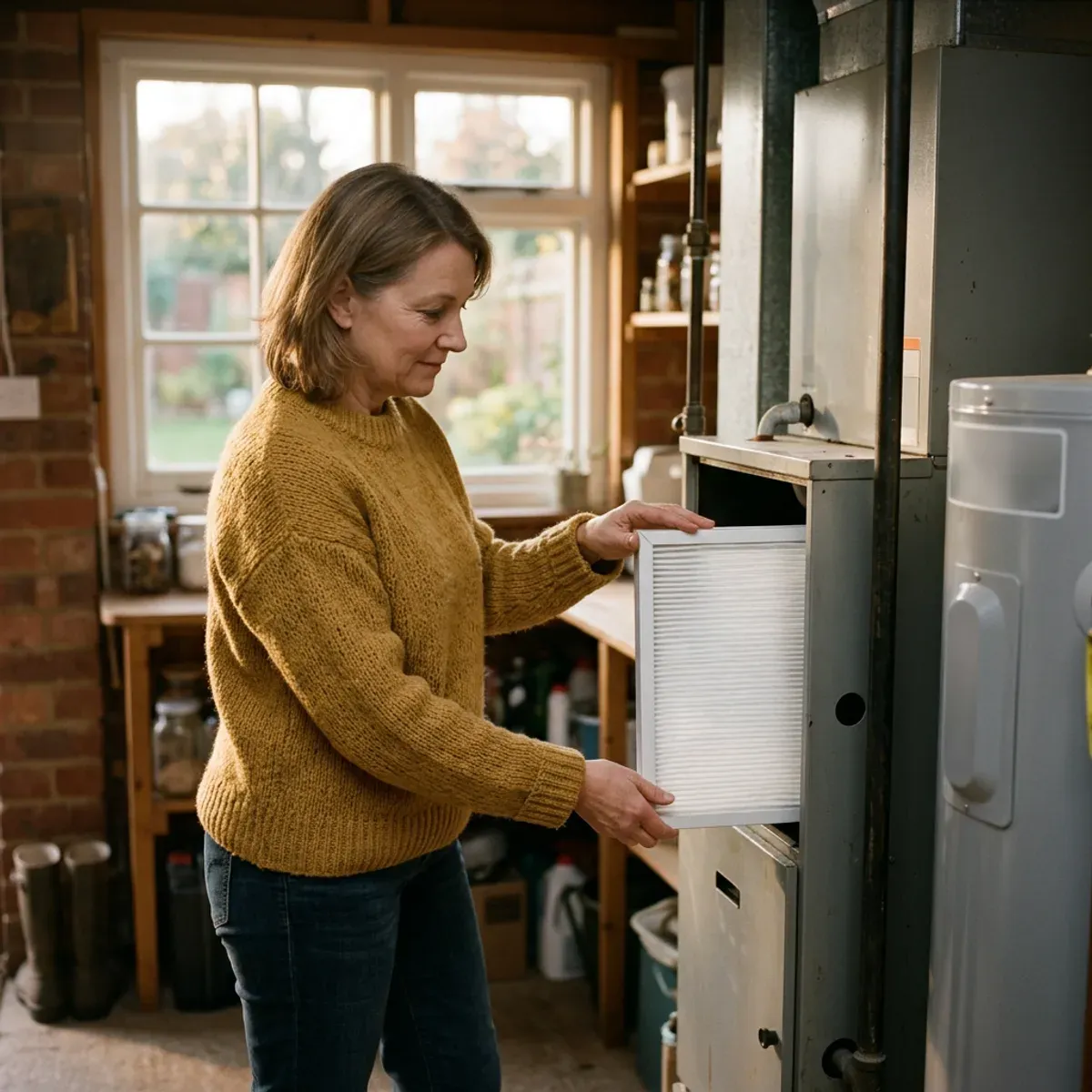
Your Simple DIY Checklist
- Read your furnace and filter manuals. Model-specific instructions always override generic advice. Note your filter size, type, airflow direction, and the MERV rating your furnace allows.
- Inspect the air filter monthly during heavy winter use. A common rule of thumb is to check monthly and change at least every three months, and sooner when the filter is loaded. Confirm the interval against your own furnace and filter manuals.
- Keep supply registers and return grilles open and clear. Move rugs, furniture, and storage away from them. Closing lots of registers is not an efficiency trick. It can restrict return airflow and trip the furnace’s high-limit control.
- Keep the furnace area clear. Do not store paint, gasoline, solvents, or cardboard near the furnace. TSSA advises keeping a clear zone around the unit, and you want room for emergency service if it is ever needed.
- Confirm your thermostat works. At the start of the season, check that it is set to Heat, the setpoint is above room temperature, and the schedule has not been changed by accident. Replace batteries if yours uses them.
- Clear exterior vents after every storm. We will cover this in detail below, since it is a big deal up here.
- Test your CO alarms monthly using the test button. Replace batteries at least once a year, and replace the whole alarm at its stated end-of-life date.
- Keep records. Note the date, filter size and MERV, anything you noticed, and any service visits. Enbridge Gas recommends keeping appliance maintenance records.
Listen and Watch During a Heating Cycle
Early in the fall, before severe cold, run your furnace through a full cycle and pay attention. Note any delayed starting, repeated stopping, unusual vibration, rumbling, scraping, combustion odours, weak airflow, or rooms that no longer heat evenly. If a diagnostic light is flashing, write down the code. Do not open the combustion section to investigate.
For more on how these habits affect the life of your unit, see our article on how long a furnace lasts in Timmins.
Filter Maintenance Deep Dive
Filters are the single most common DIY task, so they deserve a closer look. A clean filter protects your blower and keeps airflow strong. A loaded one strains the whole system.
How to Change a Filter Safely
- Turn the furnace power off before opening the filter-access panel.
- Slide out the old filter and check it against a light. If you cannot see light through it, replace it.
- For a disposable filter, note the airflow arrow and point it toward the furnace.
- Only wash a filter if it is specifically labelled as reusable. Most are not.
- Close the panel and restore power.
Choosing the Right Filter
Do not assume a higher MERV number is automatically better. Higher-efficiency filters can increase pressure drop, reduce airflow, and raise fan energy use. The goal is the highest efficiency your furnace, filter cabinet, and blower are designed to handle.
MERV is the recognized filter-efficiency rating system. As a general guideline, a ducted system benefits from filtration that meets or exceeds the minimum rating in your installation guidance, with filters that fit the equipment and are easy to access and service. Check the rating your own furnace and installer specify.
A few points worth knowing:
- There is no universal rule that a 4-inch media filter is required or always better than a 1-inch filter. Sizing, airflow capacity, and cabinet design vary by furnace.
- Do not stack filters or run a standard filter and an electrostatic filter together unless the system was designed for it.
- Pets, renovations, wildfire smoke, and a thin 1-inch filter can all mean you need to change more often. The 90-day mark is a maximum baseline, not a promise.
Whole-house duct cleaning is not a standard part of furnace maintenance. The EPA generally suggests duct cleaning only as needed, and duct cleaning alone is widely understood to have little effect on HVAC performance or indoor air quality. Confirm the current guidance before paying for a service you may not need.
Clearing Exterior Vents in Northern Ontario
This one is close to our heart because it is a real problem here. Modern high-efficiency furnaces vent through plastic pipes that often exit the side of your house. After heavy snow, these can get buried or iced over.
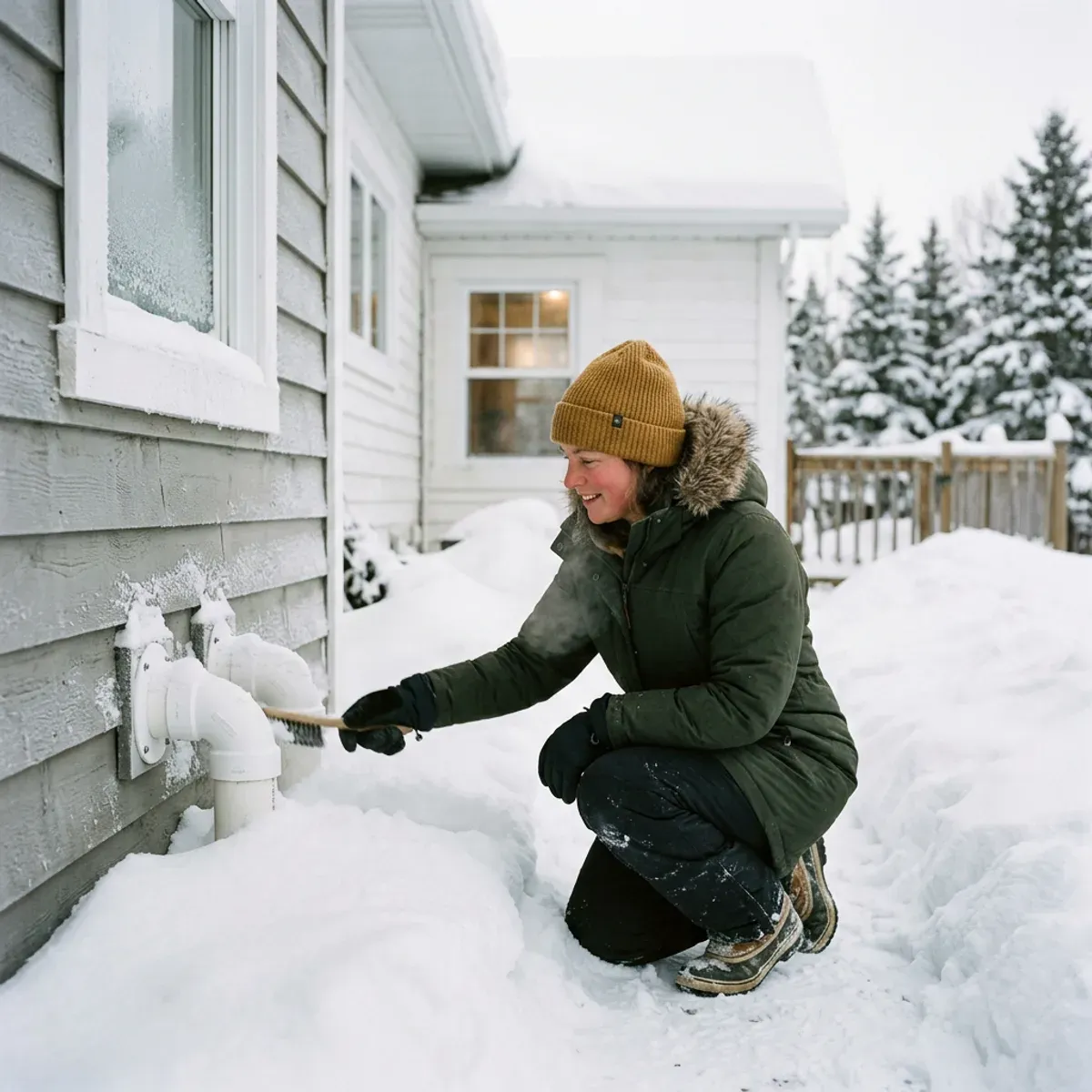
Timmins gets heavy annual snowfall, so you need to check your intake and exhaust terminals after every significant storm.
What to do:
- Use a broom or soft brush to clear snow.
- Keep the openings clear so air can flow in and exhaust can flow out.
What not to do:
- Do not kick the pipe or the gas meter.
- Do not use a shovel or sharp tool on the vents.
- Do not try to break or melt heavy ice.
A blocked exhaust can let carbon monoxide build up indoors. If you cannot clear ice safely, stop and call Enbridge Gas.
Professional Maintenance Tasks and Why They Matter
Here is where the line is firm. Anything involving fuel, combustion, burners, ignition, the heat exchanger, gas pressure, electrical measurements, internal safety controls, or vent integrity belongs to a qualified professional. These tasks need specialized tools, training, and safety protocols.
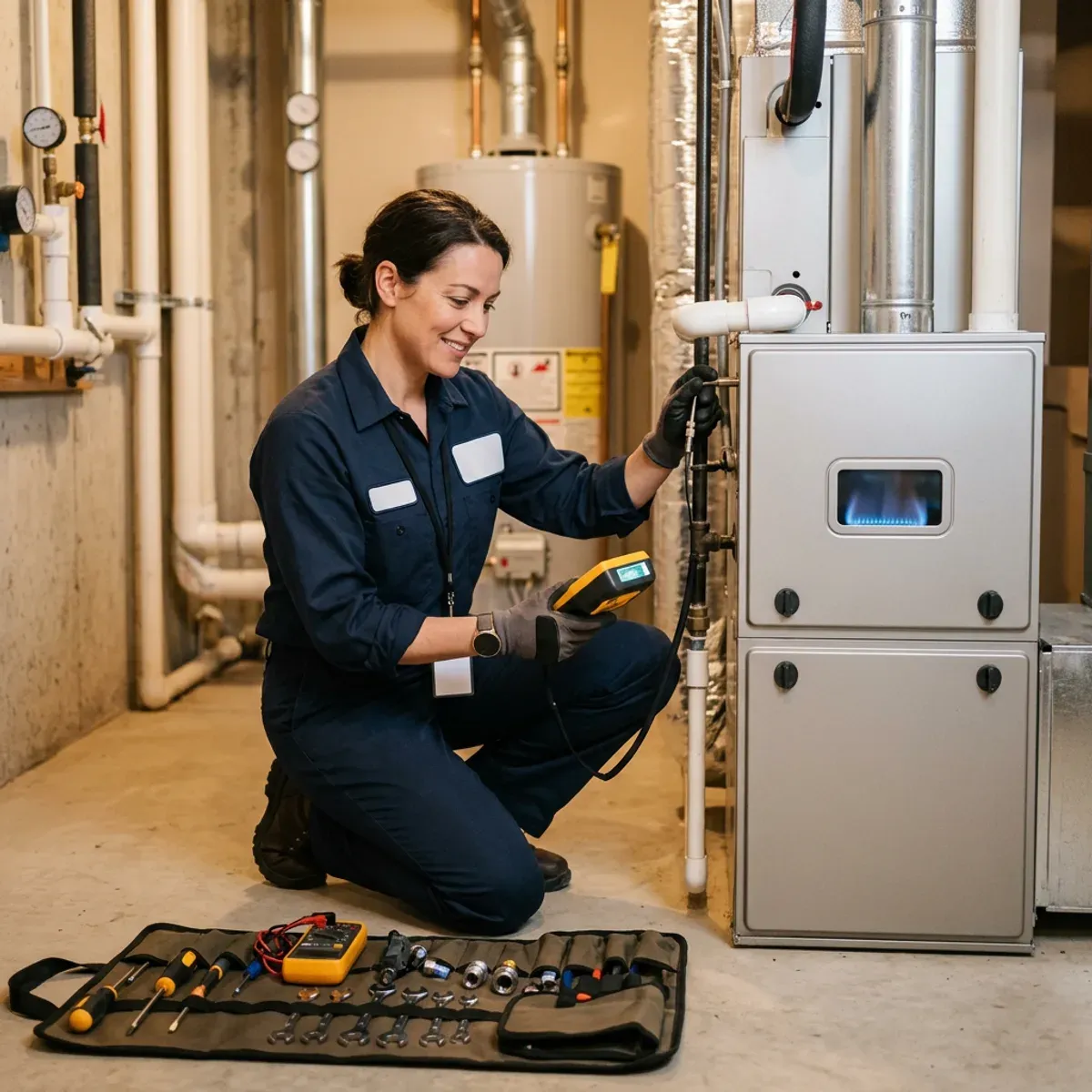
A credible annual tune-up should include:
- Combustion and CO analysis to confirm the furnace is burning correctly and to compare results against the manufacturer’s specifications.
- Heat exchanger inspection for cracks, holes, corrosion, or overheating. This is not a reliable flashlight check you can do yourself.
- Burner, igniter, and flame-sensor service, cleaned only when inspection shows it is needed.
- Gas pressure and connection testing to check for leaks and correct fuel input.
- Venting and combustion-air inspection of the flue, inducer, and sidewall pipes for blockage, damage, or disconnection.
- Safety-control testing of high-limit, rollout, pressure, and flame-proving switches.
- Electrical testing that measures voltage and current, not just a visual look at the wiring.
- Blower and airflow testing, including static pressure and temperature rise compared to the data plate.
- Condensate drain service on high-efficiency furnaces, checking and priming the trap where required.
- A full-cycle performance test and written findings that separate safety defects from optional improvements.
In Ontario, servicing or maintaining fuel-burning furnaces is generally work for a TSSA-registered fuels contractor employing certified fuel technicians; confirm a company’s registration and a technician’s certification before booking. You can read TSSA’s guidance on protecting your home from carbon monoxide for more detail.
Safety Risks of DIY Overreach
We trust homeowners to do plenty. But some tasks carry real risk if you are not trained and licensed. Here is what to leave alone.
Do not attempt:
- Removing or cleaning burners, flame sensors, or igniters.
- Repeatedly resetting a malfunctioning ignition system.
- Adjusting gas valves, manifold pressure, or fuel input.
- Opening fuel piping or testing for leaks with a flame.
- Patching, drilling, or declaring a heat exchanger safe.
- Bypassing a pressure, rollout, limit, door, or flame switch.
- Replacing internal electrical, gas, or combustion parts.
- Altering intake, exhaust, chimney, or condensate piping.
- Removing access panels to boost airflow. NRCan warns this can upset combustion and circulate combustion products through your home.
The reasons are straightforward: gas leaks, carbon monoxide exposure, electrical shock, voided warranties, and expensive damage. This is not about scaring you. It is about where the tools and training actually matter. For the official homeowner guidance, see the Natural Resources Canada home energy efficiency guide.
What Professional Furnace Maintenance Costs
Let us be straight with you on cost, because this is where a lot of articles go vague. We will not invent a number.
There is no verified Timmins-specific average price published by any utility or regulator that we can point to. Real prices vary based on:
- Your furnace type and age.
- How accessible the unit is.
- The scope of the visit and whether any repairs or parts are included.
- Scheduled service versus an emergency call.
What we can say plainly is that a planned tune-up almost always costs less than an emergency no-heat call during a cold snap. That is simple cause and effect.
On rebates, be careful what you believe. FortisBC currently lists a $50 furnace-or-boiler service rebate for residential gas customers, limited to one per household, with the service done by a licensed gas contractor and the application submitted within 60 days of the invoice date. That is a British Columbia program. We could not verify any Fortis Ontario furnace-maintenance rebate in the available official sources, so do not assume one exists here. Always confirm current programs before counting on them.
Seasonal Timing for a Timmins Winter
Timing matters more here than it does in milder parts of the country. Timmins regularly sees very cold January temperatures, and extreme lows can reach deep into the minus forties. A marginal furnace becomes a safety problem fast at those numbers.
Here is a simple schedule:
- Late summer to early fall: book your professional inspection before the first sustained freeze. Contractors get busy once no-heat calls start rolling in, so earlier is better.
- Through the heating season: do your monthly filter checks, CO alarm tests, and vent clearing after storms.
- Spring: a final filter check and a look for any issues before shutting down for the warm months.
Guidance on service frequency varies, with some general NRCan material mentioning gas equipment at least every two years, while Enbridge Gas, TSSA, Health Canada, and major manufacturers point toward annual service. For our long, severe winters, we recommend an annual inspection before the heating season.
When to Call a Professional Right Away
Some signs mean you should stop troubleshooting and call for help. Keep this list handy.
Call promptly if you notice:
- The furnace starts and stops repeatedly or trips the high-limit control.
- The breaker trips again after one reset.
- No ignition, repeated ignition attempts, or lockout.
- Soot, scorching, melted plastic, or combustion odours.
- Rumbling, banging, scraping, or heavy vibration.
- Water leaking from a high-efficiency furnace.
- Damaged, shifted, or corroded venting.
- A yellow, unstable, or delayed burner flame in the viewing port.
- Uneven heating or weak airflow after you have already checked the filter and registers.
If a technician finds a cracked heat exchanger, stop using the furnace until it is made safe.
Two Emergencies That Cannot Wait
If a CO alarm sounds: get everyone, including pets, outside right away and call 911 from outside. Do not go back in until responders say it is safe. CO symptoms can feel like the flu without a fever: headache, nausea, dizziness, and drowsiness.
If you smell gas (a rotten-egg odour or hissing): leave immediately, do not touch any switches or phones nearby, do not look for the leak, and from a safe spot call 911 and Enbridge Gas at 1-866-763-5427. Remember, a CO alarm does not detect a natural-gas leak.
Choosing a Qualified Contractor
When you decide who to call for furnace maintenance, a little homework protects you.
- Verify the company in TSSA’s Authorized Heating Fuel Contractors registry. Registry status is legal authorization, not an endorsement.
- Ask for the technician’s name and certificate classification. TSSA can verify this at no cost.
- Ask what the tune-up includes before you book. A credible visit involves measurements and safety testing, not just a quick filter change.
- Request written results and a clear demonstration of any defect.
- Be wary of unsolicited callers claiming an inspection is mandatory. TSSA does not send people door to door to sell inspections, and Ontario generally restricts unsolicited door-to-door furnace sales.
If something is already going wrong, our furnace repair service is here to help.
Making Maintenance Simple
Keeping up with maintenance is easier when you do not have to track every date yourself. Many homeowners prefer to let a local crew handle scheduling the annual inspection while they take care of filters, alarms, and vents. If you want to take that off your plate, ask us about seasonal maintenance and we will walk you through the options in plain terms.
If you are also weighing a bigger upgrade, our look at high-efficiency furnaces in Timmins covers whether the investment pays off up here.
The bottom line is simple. Do the DIY tasks you can handle well, and bring in a licensed professional for the combustion, safety, and fuel work that keeps your home safe. Book your pre-winter inspection early, before the cold settles in for good.
For all your heating and cooling needs, call (705) 221-0677.
Mike Ironclad
