
On this page
- Who This Article Is For (and Who It Is Not)
- What “High-Efficiency” Actually Means
- Why Efficiency Matters More Here Than Down South
- The Real Savings Math
- Upfront Cost: What to Expect
- Features Worth Paying For in a Northern Climate
- What About Rebates?
- When High-Efficiency Makes the Most Sense
- Installation Quality Decides Whether You Get the Savings
- Reliability and Lifespan in Timmins Winters
- The Bottom Line
For all your heating and cooling needs.
Call dispatch at (705) 221-0677 or request service.
If you are staring down a furnace that is limping through its final winters, you are probably asking one very fair question: is a high-efficiency furnace actually worth the extra money in a place like Timmins? Up here, the heating season runs long and cold, so the answer matters more than it would in a milder part of the country. We work in these winters every day, and we would rather give you the straight version than push you toward the priciest option on the shelf.
This article walks through the real numbers, the trade-offs, and the situations where a high-efficiency furnace pays off, plus the cases where you might not need to spend extra.
Who This Article Is For (and Who It Is Not)
This is written for homeowners in Timmins and nearby communities like South Porcupine, Schumacher, Cochrane, Kapuskasing, Kirkland Lake, Hearst, and Smooth Rock Falls who:
- Already have natural gas and ductwork in the home.
- Are facing an aging or failing furnace and weighing a replacement.
- Want to understand whether the higher upfront cost of a high-efficiency model pays back over time.
This is probably not for you if:
- You are looking for step-by-step furnace installation instructions.
- You need furnace repair or maintenance troubleshooting.
- You heat with a boiler or hydronic system only and want a deep dive on that specific setup.
If you want the full picture on getting a new unit installed, see our furnace installation service page.
What “High-Efficiency” Actually Means
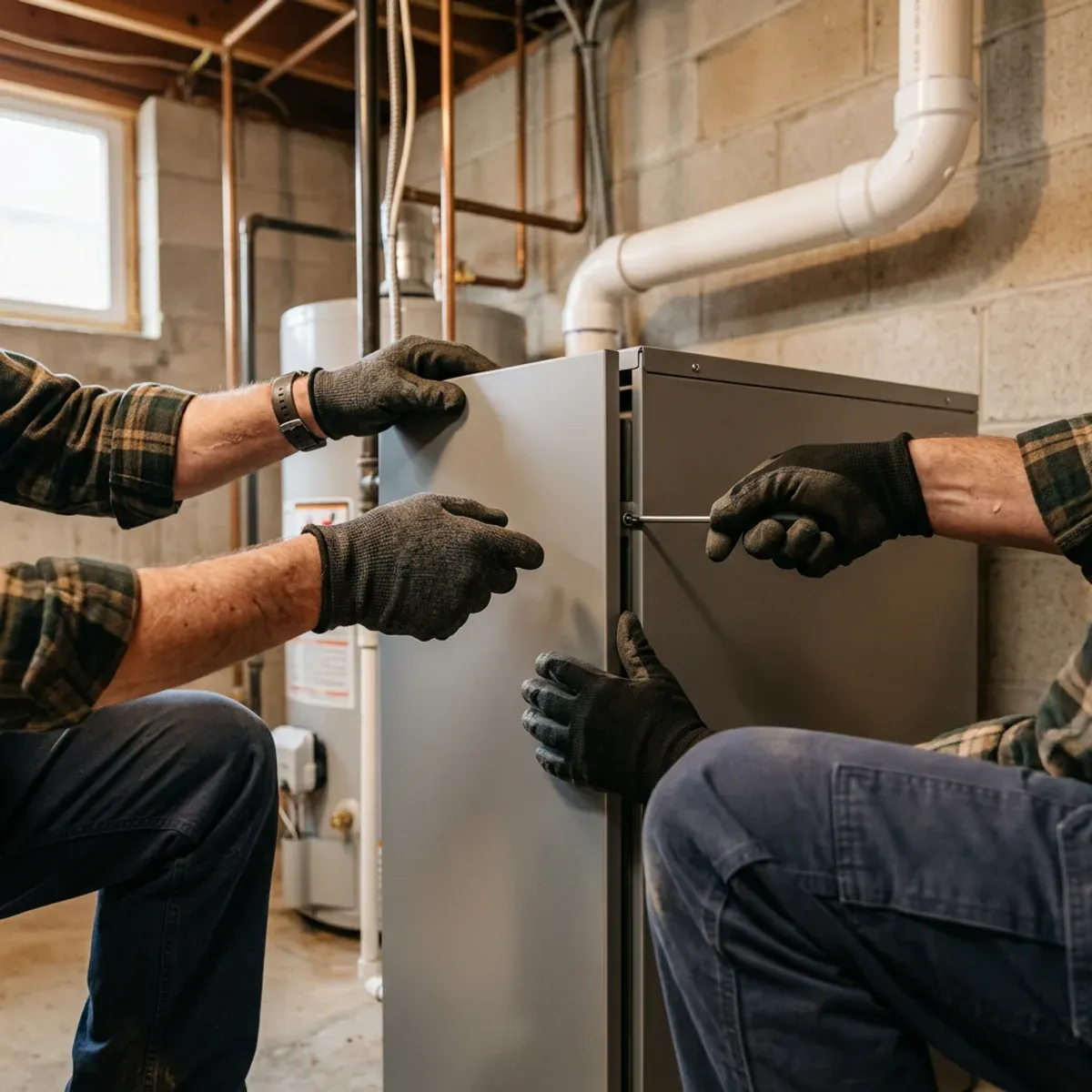
Furnace efficiency is measured by something called AFUE, short for Annual Fuel Utilization Efficiency. It is the percentage of the fuel your furnace burns that actually turns into heat for your home.
Here is the simple version:
- A furnace with 95% AFUE turns 95% of the gas it burns into heat. About 5% is lost up the exhaust.
- An older furnace at 60% AFUE wastes 40% of the fuel it burns.
Condensing gas furnaces are the most efficient type on the market, reaching well into the 90s on AFUE. These units pull extra heat out of the exhaust gases by condensing the water vapour, and because of that they are generally permitted to vent through approved plastic pipe instead of a chimney, though your contractor should confirm the venting against current requirements. You can read more in Natural Resources Canada’s Heating with Gas guide.
For the ENERGY STAR label, a gas furnace has to be a condensing model with an AFUE of 95% or higher. You can check specific models in Natural Resources Canada’s list of ENERGY STAR certified furnaces.
A quick note on standards: efficiency requirements for gas furnaces sold in Canada are set by federal product rules, and installation requirements come from Ontario’s building and equipment codes. These are not a single Canada-wide AFUE number, and there are exceptions for certain equipment classes. If your contractor quotes a specific rating, ask them to confirm it against the current rules rather than a rule of thumb.
Why Efficiency Matters More Here Than Down South
The reason this question is even worth asking in Timmins comes down to our climate. We do not run our furnaces occasionally. We run them hard, for months.
Timmins sits in a cold continental climate, with deeply cold winters and January lows that regularly fall well below freezing. On top of that, our annual heating degree days are high, which is just a way of measuring how much heating a place needs over a year.
Here is the cause and effect that matters:
- Long, cold winters mean your furnace runs for many hours.
- The more hours it runs, the more fuel it burns.
- The more fuel it burns, the bigger the impact of every efficiency point.
In a mild climate, the gap between a mid-efficiency and a high-efficiency furnace might be small in real dollars. In Timmins, that same gap gets multiplied across a heating season that can stretch from October into April or May.
Space and water heating make up a large share of residential energy use nationally, with space heating being the single biggest piece. That tells you heating is the biggest lever you have on your energy bill, and efficiency is how you pull that lever.
The Real Savings Math
Let’s put numbers to it. Natural Resources Canada provides a straightforward way to estimate annual savings when you upgrade a furnace. You take the efficiency gain, divide it by the new furnace’s efficiency, and multiply by your current annual heating cost.
Upgrading from an old, low-efficiency furnace to a modern 95% AFUE unit can meaningfully cut your annual heating costs, and the bigger the gap between your old and new efficiency, the larger the reduction in fuel use.
Here is a realistic example for a Timmins home. Say your current furnace runs at 70% AFUE and you spend about $1,600 a year on gas for heating. Upgrade to a 95% AFUE unit and the math works out like this:
- Efficiency gain: 95 minus 70 equals 25.
- Savings fraction: 25 divided by 95, which is about 0.263.
- Annual savings: 0.263 times $1,600, which is roughly $421 per year.
Over a 15-year furnace life, that is around $6,300 in fuel savings, assuming stable gas prices and usage. If the extra cost to step up to high efficiency was about $2,000, your simple payback would land near 4.75 years. After that, the savings are money back in your pocket.
A word on the numbers behind this: your actual savings depend on your real AFUE ratings, your specific gas rate, your insulation, and your thermostat habits. Natural gas rates in Ontario vary by utility, rate class, and billing period, so we would confirm your current rate and effective date rather than quoting a single Northern Ontario price. Use the numbers above as a framework, not a guarantee.
Upfront Cost: What to Expect
High-efficiency furnaces cost more upfront than older or lower-efficiency models, but here is the practical reality: in today’s market, high-efficiency condensing furnaces are essentially the standard offering. Most units installed in Ontario in recent years are high-efficiency condensing models, and some reach even higher ratings.
When you get a quote, watch for a few things that can change the price:
- Furnace size and model you choose.
- Venting changes, since condensing units vent through plastic pipe rather than a chimney.
- Condensate drainage provisions.
- Ductwork or gas line adjustments if needed.
We quote the price before the work starts, so you are not guessing. No buried surprises on the invoice.
Features Worth Paying For in a Northern Climate
Not every upgrade on the spec sheet earns its keep in Timmins. A few genuinely do, because they help during the coldest stretches.
Two-Stage and Modulating Burners
Instead of running full blast or off, these burners can run at lower output when the demand is lighter. The result is steadier temperatures and less on-off cycling. In deep cold, that means fewer big temperature swings in the house.
Variable-Speed Blowers
These blowers adjust their speed to match demand. They move air more evenly, run quieter, and use less electricity than a single-speed blower. In a home that runs its furnace for months, that quieter, steadier airflow makes a real comfort difference.
Sealed Combustion
Sealed combustion units pull air for burning from outside rather than from inside your heated home. That is safer and avoids sucking your warm indoor air into the burner.
What to do: prioritize these features if you want steady comfort through long cold snaps.
What not to do: do not assume every add-on is worth it. If a feature does not clearly improve comfort, efficiency, or reliability for your situation, it is fair to skip it.
What About Rebates?
This is where a lot of older advice online is now out of date, so here is the honest, current picture as of late 2026.
- The federal Canada Greener Homes Grant is closed. The last day to submit grant documents was December 31, 2025.
- The federal Canada Greener Homes Loan is also closed to new applications. Previously approved loans stay in place under their existing terms.
- The Ontario Home Efficiency Rebate Plus route, which combined Enbridge Gas incentives with the federal grant, is no longer open for new work.
- The former Enbridge Gas Home Efficiency Rebate program has ended its intake as well.
We could not verify a current Ontario government rebate specifically for installing a high-efficiency residential furnace, and we could not confirm a current federal or provincial tax credit tied to a furnace upgrade. Programs change, sometimes on short notice, so check the latest status before you count on any incentive. A good starting point is Save on Energy’s Home Renovation Savings page, which lists what Ontario’s current program covers.
When High-Efficiency Makes the Most Sense
We are not going to tell you high efficiency is the right call in every single case. Here is a simple way to think it through.
A high-efficiency furnace makes strong sense when:
- You have natural gas and existing ductwork.
- You plan to stay in the home for several more years.
- Your current furnace is old, inefficient, or failing.
- Your home is reasonably well insulated, so you keep the savings you earn.
Standard efficiency may be adequate when:
- You are in a very short-term situation and plan to move soon.
- Certain limited equipment-class exceptions apply, which your contractor can confirm.
That said, because high-efficiency condensing units are now the norm in the market, most Timmins homeowners replacing a furnace will end up with a high-efficiency unit anyway. If you are weighing a furnace against a heat pump, our heat pump versus furnace comparison for Timmins homes breaks that down.
Installation Quality Decides Whether You Get the Savings
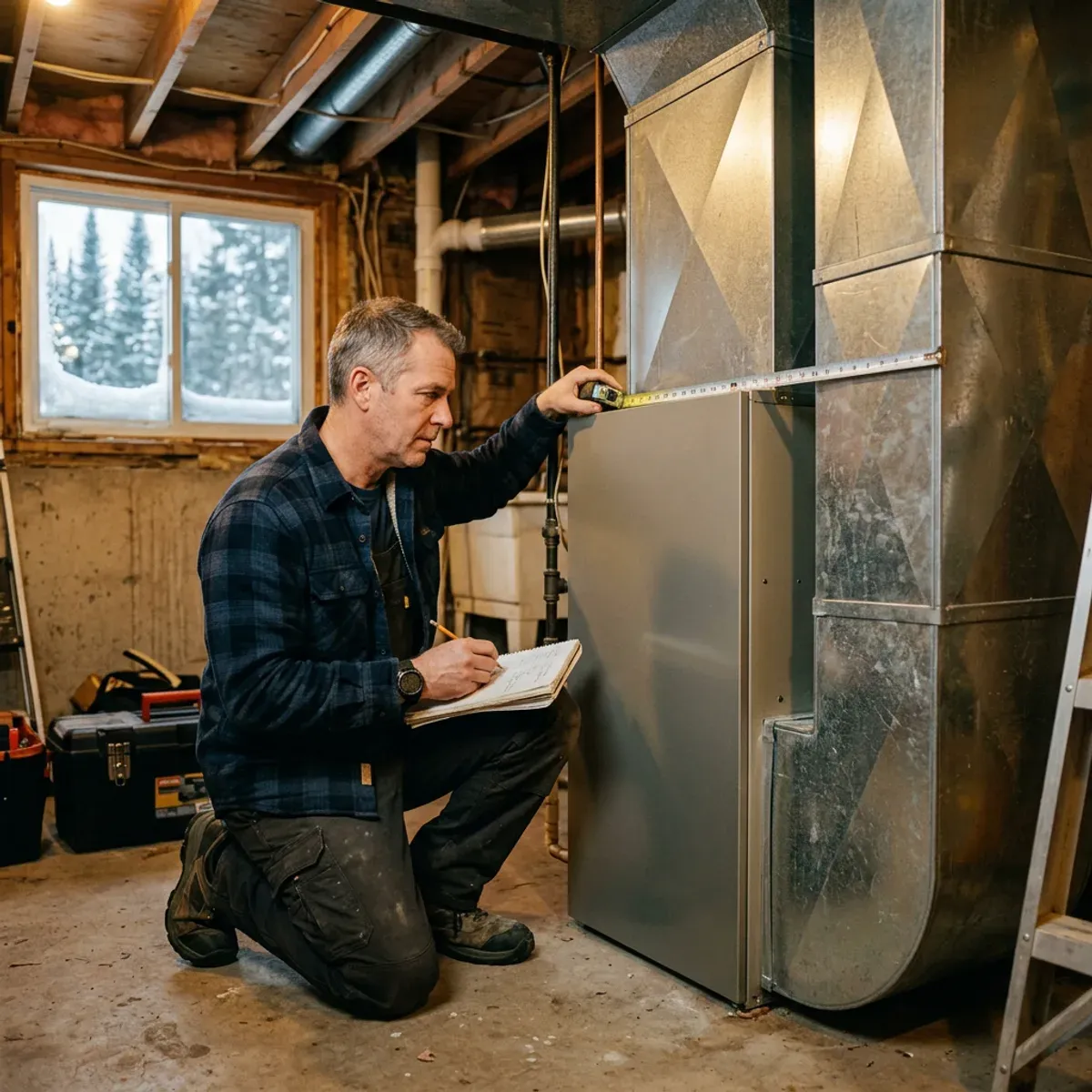
Here is a truth that gets skipped in a lot of sales pitches: a 96% AFUE furnace only delivers 96% performance if it is sized and installed right.
Common mistakes we see:
- Oversized furnaces that short-cycle, wearing out faster and delivering uneven heat.
- Undersized furnaces that struggle to keep up on the coldest nights.
- Leaky or poorly designed ductwork that throws away the efficiency you paid for.
The fix is a proper heat loss calculation using real Timmins climate data, not a rule of thumb borrowed from a milder region. A unit sized for southern Ontario can run itself ragged up here. If you want to understand how sizing works, see our furnace sizing guide for Timmins homes.
Reliability and Lifespan in Timmins Winters
A gas furnace can commonly last around 15 to 20 years, though harsh winters and skipped maintenance can shorten its useful life. Our winters are hard on equipment, so two things protect your investment:
- Replace proactively before an old unit dies at -30C, when you have no time to compare options.
- Book seasonal maintenance so the unit keeps running at its rated efficiency and you catch small problems before they become no-heat calls.
A high-efficiency furnace that runs fewer hours to hit the same temperature generally faces less wear than an overworked old unit. Combine that with a yearly tune-up and you cut your odds of a mid-winter breakdown. For more on what shortens or extends furnace life, see our guide on how long a furnace lasts for Timmins homeowners.
The Bottom Line
For most Timmins homeowners with natural gas and ductwork, a high-efficiency furnace is worth the investment. The long heating season multiplies your savings, the payback usually lands within a handful of years, and the newer features keep your home steadier through the worst cold.
The keys are simple: confirm the AFUE rating, confirm your current gas rate, get the unit sized properly, and work with a local, TSSA licensed crew that quotes the price before the work starts and stands behind it.
If you want a straight answer about your specific home, we are happy to walk you through it in plain terms. For all your heating and cooling needs, call (705) 221-0677.
Mike Ironclad
